

A local parent-teacher association is continuing to push back against school leaders’ plans to end the Integration Station program for preschool-age youth with disabilities.
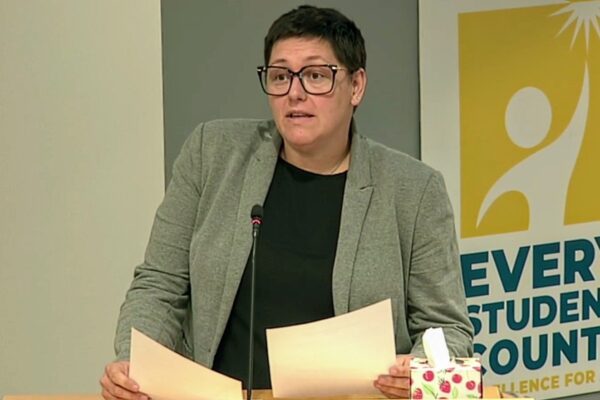
The result has been “a growing gap in the trust between Arlington Public Schools, the School Board and the families they serve,” said Alaina Clark, president of the Arlington Special Education Parent-Teacher Association (SEPTA).
Clark spoke at the Oct. 8 School Board meeting, where advocates for Integration Station pressed Board members to rescind, for a second time, a plan to close the program.
The Integration Station is run by The Children’s School in partnership with APS. It serves students ages 2 to 5 with developmental issues.
In early 2025, Superintendent Francisco Durán and staff announced plans to end the relationship and return the students to neighborhood schools. After outcry, School Board members overturned that decision.
Now that a similar action has been announced, some parents and community leaders feel betrayed.
Clark, whose remarks had been authorized by the SEPTA board of directors, accused school leadership of misleading the community.
“Families still do not know why this decision was made, what problem it is meant to solve or what will replace the program,” she said.
SEPTA executive vice president Erin Turner said the Integration Station was a key component of broader services to at-risk students.
“Early intervention is critical for children with disabilities, and that need is growing,” she told School Board members.
Turner said SEPTA leaders applauded recent efforts to increase programming for at-risk students, but they should not be at the expense of programs that have proven their worth.
“We should be opening new classrooms, yes, but not closing the ones we have,” she said. “We need them all.”
As they had in late September, parents of current and former Integration Station students again pressed their concerns at the Oct. 8 meeting.
“For three years, we’ve endured mixed signals,” Sarah Shifrin said.
Now, she said, “you are taking a hatchet to the gold standard in special education without an effective alternate plan in place.”
Clark said her organization wanted the School Board to again rescind closure plans, then engage in good-faith efforts with the community.
“We want to work with you,” she said, but school leaders have to first “publicly explain how this decision was reached, pause implementation and work with families, educators and the broader community to develop a data-driven plan” for future decisions.
As is the norm after School Board public-comment periods, Board members did not respond to concerns raised, but said they would follow up on them.
