
Get ready for more storms.
While thousands of people are still without power in Arlington and Falls Church, another round of stormy and potentially damaging weather is on the way.


Get ready for more storms.
While thousands of people are still without power in Arlington and Falls Church, another round of stormy and potentially damaging weather is on the way.
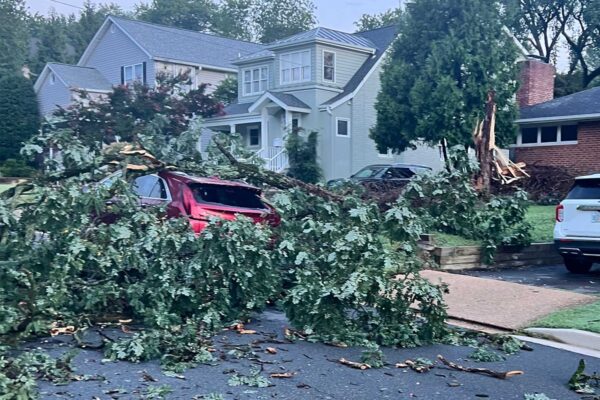
Update at 6 p.m. — The outages are now down to 2,407 Dominion customers, with estimated restoration times potentially stretching to or through midnight. An Arlington County spokesman described Thursday night’s weather event as a “25-year storm.”
Update at 1:30 p.m. — Arlington outages are back up to 10,318 power customers, according to Dominion. Another 282 are in the dark in the City of Falls Church.

Update at 12:20 a.m. — Follow our after-storm coverage here.
Update at 11:25 p.m. — Arlington is now under a Severe Thunderstorm Warning.

A Severe Thunderstorm Watch has been issued for Arlington, Falls Church and much of the D.C. area.
Strong storms with damaging wind gusts up to 70 mph, along with hail and frequent lightning, are possible later today, forecasters say.
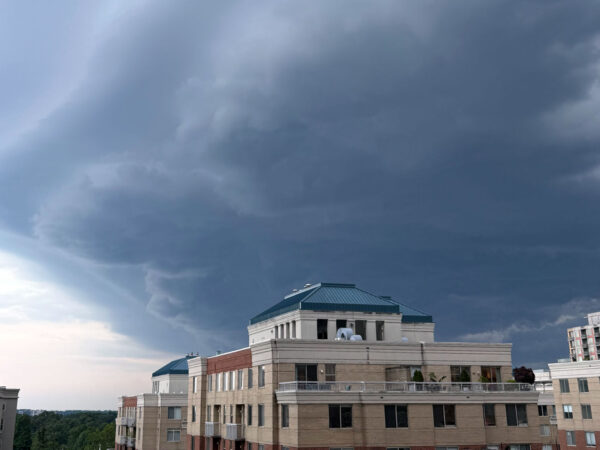
A Severe Thunderstorm Watch has been issued for Arlington, Falls Church and much of the D.C. area.
The watch is in effect until 10 p.m. Forecasters say strong storms with damaging winds, hail and even ”a couple” of tornadoes are possible tonight.
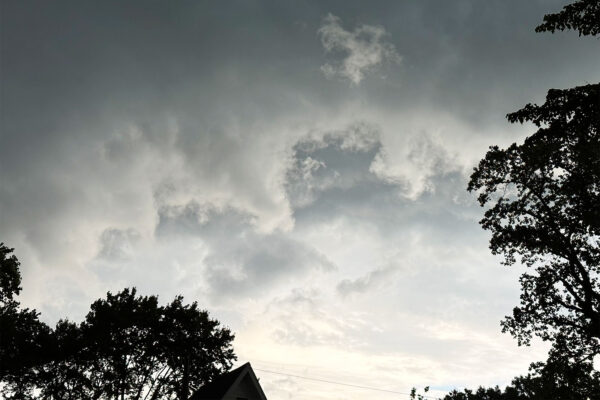
A Severe Thunderstorm Watch and a Tornado Watch have been issued for Arlington, Falls Church and much of the D.C. area.
The tornado watch was issued around 3 p.m., about a half hour after the storm watch. Both watches are in effect until 10 p.m.

A Severe Thunderstorm Watch and Flood Watch have been issued for Arlington, Falls Church and much of the D.C. area.
The storm watch was issued just before 4:45 p.m. and is set to remain in effect until 11 p.m. The National Weather Service says hail, wind gusts up to 65 mph, and “a couple tornadoes” are all possible with a line of storms approaching from the west.
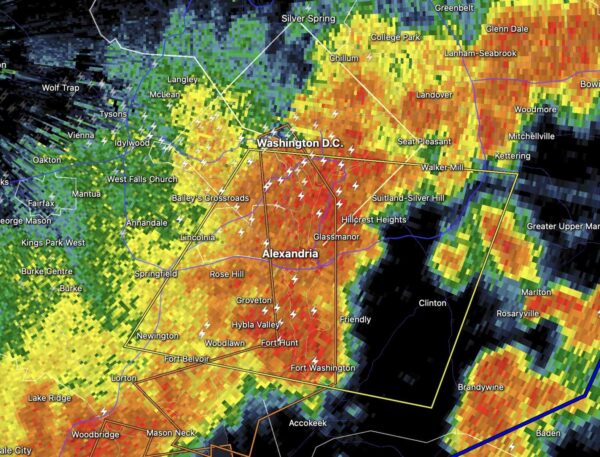
Update at 6:35 p.m. — A possible lightning strike caused a minor house fire on the 400 block of N. Bryan Street in Lyon Park, according to scanner traffic.
Update at 6 p.m. — Throughout Arlington nearly 2,500 homes and businesses are without power, according to Dominion’s website. In addition to the outage along Wilson Blvd, there are outages reported in the Arlington Mill and Forest Glen neighborhoods, as well as the Cherrydale, Maywood, Woodmont, Riverwood, and Dover Crystal neighborhoods.

Update at 4:10 p.m. — A Severe Thunderstorm Warning has been issued for all of Arlington and D.C.
Earlier: Arlington is again under a Severe Thunderstorm Watch.

A Severe Thunderstorm Watch has been issued for Arlington and much of the D.C. area.
Storms are expected later today and forecasters say they could pack quarter-sized hail, 65 mph wind gusts and frequent lightning. The watch is in effect until 9 p.m.
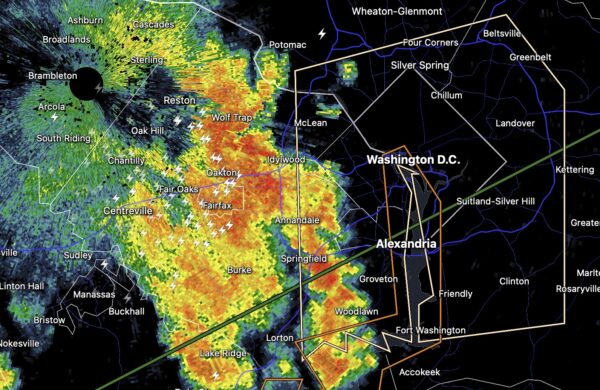
A line of strong storms with gusty winds and frequent lightning will soon be arriving in Arlington.
The storms have prompted a Special Weather Statement from the National Weather Service, for wind gusts in excess of 40 mph.

A Flood Watch will be going into effect early Wednesday amid a threat of heavy rainfall tomorrow morning.
After a humid weekend that saw more than 3 inches of rain fall on parts of Arlington, the area got to enjoy a sunny and considerably less sweltering Tuesday. That’s all about to change, though.