


The Arlington County Board is throwing its weight behind a region-wide proposal to provide more funding for Metro.
County Board members on Tuesday voted unanimously to encourage General Assembly action on the regional DMV Moves plan for sustained increases in transit funds.
The plan calls for $460 million per year in new funding, with annual increases of at least 3%, to support Metro’s capital needs. It also recommends $65 million to $80 million annually for improvements to local bus services, and for more collaboration between the 14 different transit operators in the local region.
The vote came after the boards of supervisors in Loudoun and Fairfax counties also voted to support the package.
“We are proudly lining up,” Arlington Board Chair Takis Karantonis said at the Tuesday meeting. His hope was that proponents of the package could “get everybody on board before the year ends.”
DMV Moves was an 18-month initiative sponsored by the Metropolitan Washington Council of Governments (COG) and Washington Metropolitan Area Transit Authority (WMATA). The general outlines of the plan were adopted by directors of both regional bodies in November.

The package leaves it to leaders of the Virginia, Maryland and D.C. governments to determine how to fund their shares of the new revenue, which is anticipated to start flowing in mid-2027.
Those estimated costs for the first year are:
- Virginia: $136 million
- Maryland: $152 million
- D.C.: $173 million
In Virginia, state legislators are working to craft a package that will include not just the state’s share of DMV Moves funding, but also additional support for Virginia Railway Express and Northern Virginia’s bus networks.
Arlington leaders are taking the view that failure in Richmond is not an option.
“It’s really non-negotiable that we get this done,” Board member Maureen Coffey said. “The way we as [Arlington] residents live our lives is reliant on the success of WMATA.”
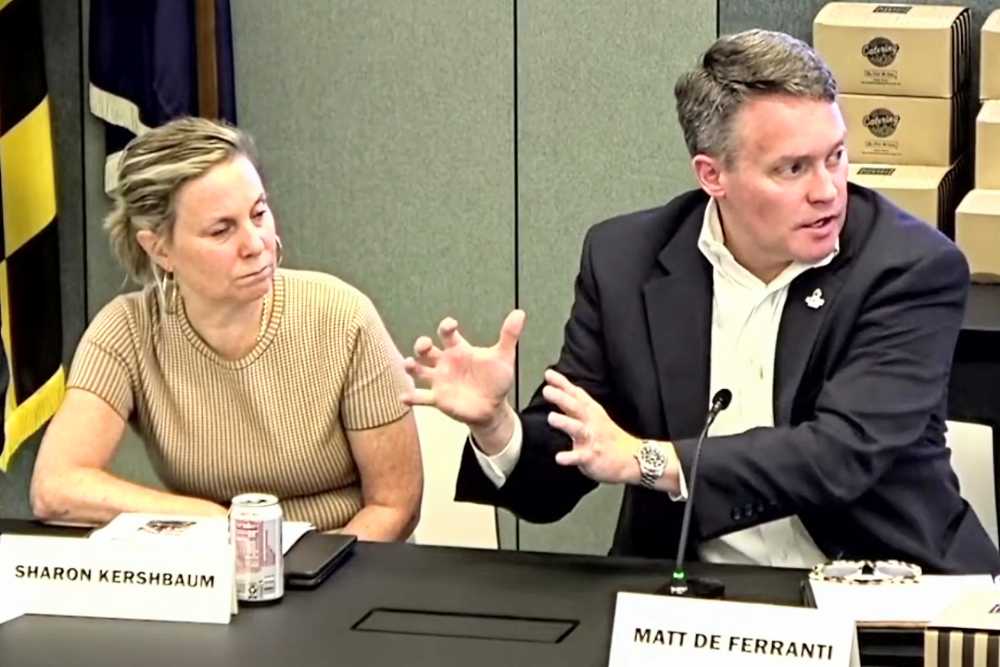
Board member Matt de Ferranti, who represented Arlington on the DMV Moves task force, said its many months of work managed to significantly cut the financial “ask” of localities, which at the beginning of the process had stood at more than $1 billion annually.
“That was the right thing to do,” he said of the reduction to $460 million per year. “That’s much more manageable.”
Karantonis previously said that while he supports the proposal, the region needs to do more in providing dedicated transit funding.
The request for Board support for the plan was brought by COG’s deputy executive director, Kanti Srikanth.
“The region is really at a pivotal moment,” he said.
Success is likely to hinge on the support, or lack thereof, from the Virginia and Maryland legislatures.
“I’m a die-hard optimist,” Srikanth said.
The effort will have a key ally in Richmond: Nick Donohue, who served as a facilitator for the DMV Moves process, recently was tapped by Governor-elect Abigail Spanberger (D) to be Virginia’s next secretary of transportation.
Loudoun County was the first to support the DMV Moves package on Dec. 2, doing so unanimously. On Dec. 9, the Fairfax County Board of Supervisors voted 8-1 to back the package, with the board’s lone Republican, Pat Herrity, voting against it.
At the Dec. 9 meeting, Fairfax Board Chair Jeff McKay said he had been a skeptic of financing plans presented at the start of the DMV Moves effort.
“Where we started is very different from where we ended,” he said, adding:
“We started with what I figured to be a very unsustainable number financially that would be very, very difficult to achieve. We ended with a dramatically pared-down number … [with] additional commitments for WMATA oversight, for financial management.”
A legislative subcommittee chaired by Sen. Adam Ebbin (D-39) adopted a report to the General Assembly laying out the options for funding Virginia’s share. Alternatives range from higher fuel taxes to a sales-tax surcharge.
In its 2026 session, state legislators could choose to impose one or more options to bring in the funding, or could give localities the ability to make their own decisions.
De Ferranti said Arlington’s local officials would be in Richmond to lobby for funding during the 60-day session, which begins Jan. 14.
“We are going to pitch in,” he said. “This will achieve an outcome in Northern Virginia that we desperately need.”
