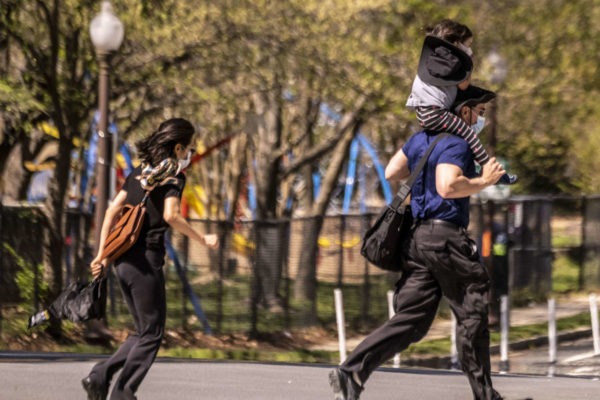
As governments at every level react (and sometimes overreact) to the ongoing COVID-19 situation, other institutions across society have risen to the occasion to fill in the gaps and confront the unintended consequences of shutting down the economy to address the present situation.

Across society, we observe four key institutions working in concert (and sometimes at odds) with one another: business, community, education, and government.


Back in January, I kicked off this series looking at the Pike Premium Transit Network.

This is the year that the Columbia Pike Streetcar was supposed to start running; since many folks claimed that a “Modern BRT” system could be implemented more quickly than a Streetcar, I’m examining how far we’ve come in that implementation compared to what was envisioned.


It’s been more than two weeks since we began our stay at home order in Virginia due to COVID-19. In that time, testing has increased which has provided a clearer picture of the pandemic.

Unfortunately, it’s become more common to learn about relatives, friends and others in our lives who have succumbed to COVID-19 related illnesses.


We are now in Week 4 of social distancing. Schools are closed. Most stores are closed or pick-up only. Arlingtonians who are not fortunate enough to be teleworking are faced with furloughs, layoffs, or difficult travel to essential work. Arlington has even closed parks, fields, courts, and playgrounds.

These are difficult changes that are intended to flatten the curve of coronavirus infections.


Knocking on doors last summer and fall, I asked Arlington voters their top legislative concerns. The largest response, by far, was for the General Assembly to take action to reduce gun violence.

That same sentiment has been growing across the commonwealth for years due to the lack of response to tragedies, such as, Virginia Tech, Sandy Hook, Parkland, Columbine, and more recently, Virginia Beach. But the gun violence prevention movement is not just about the mass shootings you see and hear about in the media. It’s the daily acts of gun violence — over 100 a day — occurring in our communities and firearm suicides that you don’t hear about.


APS teachers, parents, students, and staff have responded heroically to the shock to their routines presented by the Governor’s decision to end classroom learning for the current academic year. Our community is very fortunate to have educational leaders who have created these full-time distance learning options until in-school instruction can resume.

However, for a variety of reasons — all of which were apparent prior to the coronavirus crisis — APS must transition to revised ways of delivering its educational services. APS’s existing instruction and construction models cannot be sustained long-term.


We are all feeling the effects of this extended mandatory coronavirus isolation.

It may be as simple as a canceled birthday party or missing the senior year of a spring high school sport. Some may have lost a job or fear losing a job. You or someone you know may be sick. Or you may have experienced the tragic loss of life of someone close to you from COVID-19.


During normal times, spring break allows teachers and students to get a needed week-long break, leading up to final exams and the end of the school year. It also allows parents to plan vacations and getaways.

During the coronavirus crisis, however, everyone is (or should be) staying at home, so vacations are not really a thing. Parents, many of whom are working from home, have to pull double duty as their kids’ at-home enrichment coordinator even with school in session — more so when it’s not. Meanwhile, the workload for students, who no longer need to worry about SOLs and other high-pressure tests, has been greatly reduced.


View More Stories