
This regularly scheduled column is written by Eli Tucker, Arlington-based Realtor and Arlington resident. If you would like to work with Eli and his team in Northern Virginia and the greater D.C. Metro area, you can reach him directly at [email protected].

Question: It seems like listings lingered on the market longer than usual this summer. Is that reflected in the market data?

Answer: The summer real estate market is usually slower than spring, but since late June, this summer has felt unusually slow compared with past summer markets. I analyzed Arlington homes listed for sale in July and August, going back to 2016, and found that we did indeed experience a historically slow summer market.

5-Bullet Cliff Notes

  • Summer 2026 was slowest summer market since 2016
  • Showing activity is down significantly
  • Listing supply (homes for sale) is up significantly
  • It is still a seller’s market, just more balanced
  • Too early to accurately observe impact on prices

Slowest Summer Since 2016

Fewer homes listed in July and August went under contract within the first ten days on market (my preferred measure of market pace) than any summer since 2016.

The condo market experienced the brunt of that slowness, with the percentage of condos under contract within ten days falling 17.9 points below the trailing ten-year average. Arlington’s detached/townhouse/duplex market, one of the most robust sub-markets in the country, was not spared either; falling 6.7 points below the trailing ten-year average.

Lingering Inventory

The clearest sign of a summer slowdown is the amount of inventory that remained unresolved at the end of August. 53% of the listings entered in July and August were still active, compared with about 31% in 2025 and 27% from 2023-2025.

Even among July listings, which had at least a full month to attract a buyer, 36% remained active: more than twice the recent three-year rate. As of Aug 30, ~25% of all active summer listings had accumulated at least 30 days on market, and 9% accumulated at least 60 days.

Showings Down, Active Inventory Up

Showing data shows that we have fewer buyers in the market, not simply more indecisive/deliberate buyers. In the week ending August 23, showings in Arlington were down 7.9% from the prior week and 26.4% from the same week last year.

There are also a lot more homes for buyers to choose from, with active listings (homes listed for sale) up 2% from the week prior and 21.5% from the same week last year. Buyers will take longer to make decisions when they have more choices.

The Arlington trends are consistent with other Northern VA/DC Metro markets as well. In the DC Metro, weekly showings dropped to five-year lows in late June and remained there during most weeks of the summer. At the same time, the week ending August 23 delivered the most new listings to the market of any year since 2021, for the same week.

Total active listings in the DC Metro have been above the same week in the prior year since the second week of January 2025.

(more…)


This fall, Arlington Arts is turning 2700 Art Space into an outdoor movie destination with a free film series celebrating National Hispanic Heritage Month.

Free Movie Nights at 2700 Art Space will bring together film, music, food and community on select Friday evenings from September 18 through October 16. The series features community-curated films highlighting Latin music and its powerful role in storytelling, culture and identity.

What makes the series especially Arlington is the community behind the selections. Each evening features a film chosen in collaboration with a local community curator, bringing different perspectives and connections to the monthlong celebration.

The series kicks off September 18 with We Like It Like That, curated by Leon City Sounds, exploring the history and enduring influence of Latin boogaloo.

On September 25, Arlington Food Assistance Center curates a screening of In the Heights, the vibrant film adaptation of Lin-Manuel Miranda’s musical celebrating family, neighborhood, dreams and the Washington Heights community.

The series continues October 9 with Mambo Legends: The Music Never Ends, curated by Jim Byers of WPFW’s “Latin Flavor Classic Edition,” bringing the sounds and history of mambo to the big screen. Director Mari Keiko Gonzalez will introduce the film.

The final evening, October 16, features Disney and Pixar’s Coco, curated by Encore Stage & Studio. The family-friendly film explores music, memory and the connections between generations.

But these evenings are about more than watching a movie. Guests are encouraged to arrive at 6 p.m. to enjoy food, music and time together before each screening begins at sunset, around 7 p.m. Bring a chair or picnic blanket, find a spot and settle in for an evening under the stars.

The series also offers another opportunity to experience 2700 Art Space, Arlington Arts’ creative space at 2700 S. Nelson Street, as a place for gathering, cultural exchange and shared experiences.

Fridays, September 18–October 16 | 6–9 p.m.
2700 S. Nelson Street, Arlington, VA

September 18: We Like It Like That — Community Curator: Leon City Sounds
September 25: In the Heights — Community Curator: Arlington Food Assistance Center
October 9: Mambo Legends: The Music Never Ends — Community Curator: Jim Byers, WPFW’s “Latin Flavor Classic Edition”
October 16: Coco — Community Curator: Encore Stage & Studio

Learn more at ArlingtonArts.org. 


Each week, “Just Reduced” spotlights properties in Arlington County whose prices have been cut over the previous week. The market summary is crafted by Arlington Realty, Inc. Maximize your real estate investment with the team by visiting www.arlingtonrealtyinc.com or calling 703-836-6000 today!

Please note: The properties featured here may be listed with other brokerages– but that doesn’t limit your options. Arlington Realty, Inc. is ready to represent you, arrange showings, analyze value, and negotiate the best possible terms on your behalf. We understand the neighborhoods, pricing trends and market timing — and we use that knowledge to your advantage. 

As of August 24, there are 172 detached homes, 57 townhouses and 260 condos for sale throughout Arlington County. In total, 33 homes experienced a price reduction in the past week, including:

Please note that this is solely a selection of Just Reduced properties available in Arlington County. For a complete list of properties within your target budget and specifications, contact Arlington Realty, Inc. 


Address: 3233 4th Street North
Neighborhood: Ashton Heights
Type: 7 BR, 5 (+1 half) BA single-family detached – 5528 sq. ft.
Open House: Saturday, August 29, 2 – 4 PM; Sunday, August 30, 2 – 4 PM
Listed: $2,795,000

Noteworthy: Modern luxury in timeless craftsman style

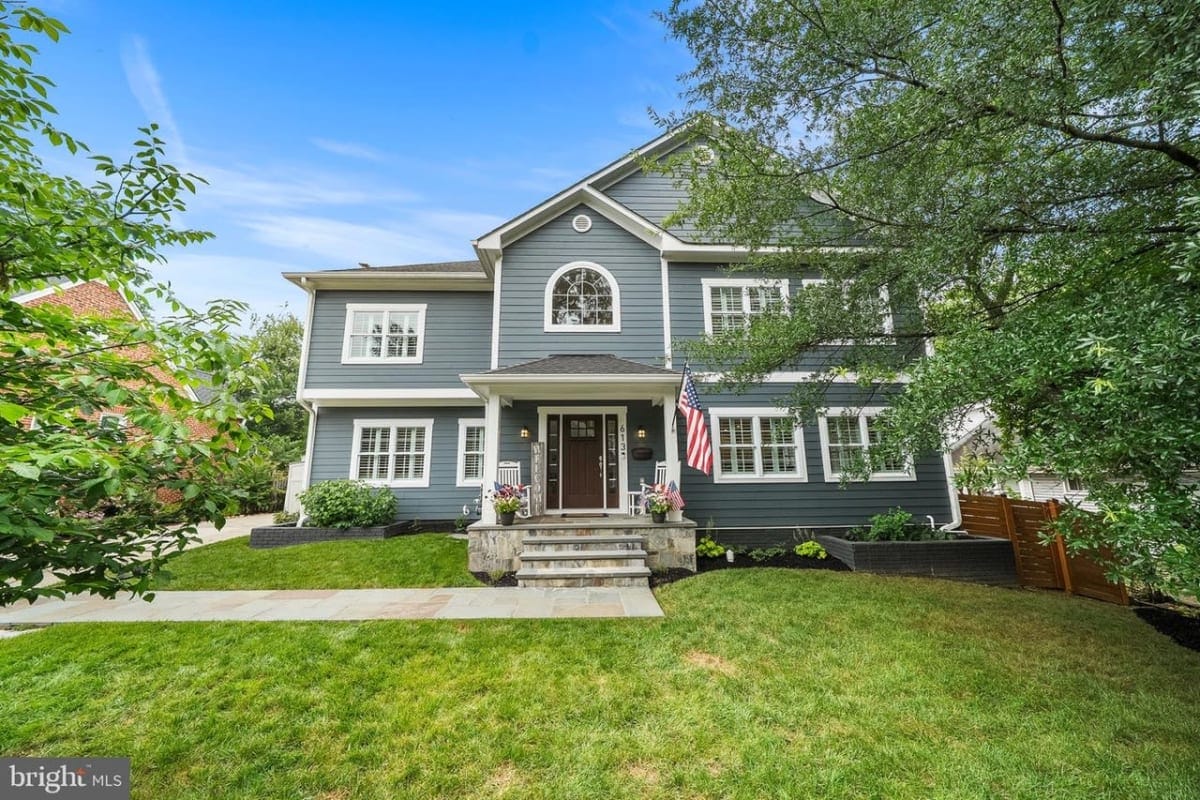
An exceptional luxury craftsman-style home in the heart of sought-after Ashton Heights. This brand-new construction, designed by Bukont Homes and built by Saffer Properties, is refined luxury in a premier location; walkable, bikeable, or a short car ride to a host of urban amenities, including the Clarendon and VA Square Metros and the bustling Orange Line corridor. At 5,528 SF across four thoughtfully designed levels, this modern home features 6 bedrooms and 6 baths, blending timeless elegance with modern comfort. The main level impresses with soaring 10-foot ceilings and exquisite wide-plank European White Oak (Open Grain Brushed) hardwood flooring throughout. At the heart of the home, a stunning gourmet kitchen showcases sleek custom cabinetry, quartz countertops, a center island, Thermador smart appliances, and a seamless flow into the spacious family room, anchored by a floor-to-ceiling gas fireplace. An elegant formal dining room is bathed in natural light, creating an ideal setting for gatherings both intimate and grand. The main level is further enhanced by a private guest suite or executive office, a custom mudroom with built-in cubbies, and a stylish powder room. Upstairs, the luxurious primary suite serves as a true retreat, complete with dual custom walk-in closets and a spa-inspired bath featuring heated floors, dual vanities, a freestanding soaking tub, and an oversized glass-enclosed shower. The walk-out lower level is designed for both relaxation and recreation, offering a spacious entertainment room, a dedicated exercise room, and an additional bedroom with a full bath.

https://www.seetheproperty.com/story/494455/b

Listed by:
Natalie Roy – KW Metro Center
[email protected]
(703) 819-4915


For many Virginia homeowners, the family home is more than an asset. It’s where children grew up, memories were made, and decades of life unfolded. Placing your home in a trust can help protect that legacy while making things easier for your loved ones in the future.

A properly structured and funded trust may help avoid probate, provide continuity if you become unable to manage your affairs, and give your family clear instructions about what should happen to the home. Here’s what Virginia homeowners need to know.

Why Put Your Home in a Trust?

A trust can provide several important benefits:

  • Fewer delays for your loved ones. A properly funded trust lets your successor trustee take control without going through the probate court, which means no waiting for a judge to authorize basic tasks like paying the mortgage or selling the home.
  • Clear direction for blended or complex families. If you’ve remarried, have stepchildren, or want to keep inherited property in the bloodline, a trust makes your wishes legally enforceable without relying on someone else’s memory or promises.
  • Private handling of family matters. Unlike a will, which becomes public once filed, a trust remains confidential. That means no one outside the family needs to know who inherits the home or under what conditions.
  • Continuity during incapacity. If you become unable to manage your affairs, your trustee can step in immediately to handle household needs, sell the property if necessary, or manage rental income without delay.
  • Flexibility in how and when assets are passed down. You can keep the house in trust for a minor child, delay distribution until a certain age, or use the home for a surviving spouse with other terms in place after they pass.

A trust isn’t necessarily the right choice for every homeowner, however. The appropriate plan depends on your family, finances, property, and long-term goals.

Step 1: Choose the Right Trust

Virginia homeowners may use several types of trusts, including revocable living trusts, irrevocable trusts, testamentary trusts, special needs trusts, and charitable trusts.

For many homeowners who want to continue controlling and living in their home while simplifying the transfer after death, a revocable living trust may be appropriate. Other situations may call for a different type of trust.

The type of trust you choose can affect control of the property, taxes, creditor protection, and how the property is distributed.

Step 2: Choose the Right Trustee

The trustee manages the property and follows the instructions in the trust. With a revocable living trust, you can typically serve as your own trustee during your lifetime and name a successor trustee to take over if you become incapacitated or die.

Choose someone you trust to handle financial and property matters responsibly. Depending on your circumstances, that could be a family member, friend, or professional trustee.

Step 3: Create the Trust Document

The trust document identifies the person creating the trust, the trustee, the beneficiaries, and the rules governing the trust.

Because your trust should reflect your specific circumstances and comply with Virginia law, working with an experienced Virginia trust attorney can help avoid vague language, missing provisions, or other problems that could create confusion later.

(more…)


This regularly scheduled column is written by Eli Tucker, Arlington-based Realtor and Arlington resident. If you would like to work with Eli and his team in Northern Virginia and the greater D.C. Metro area, you can reach him directly at [email protected].

Question: How can my condo Association meaningfully reduce its expenses?

Answer: The Master Insurance policy is often the largest, or one of the largest, annual expenses for a Condominium Association and managing it is critical to keeping stable condo fees. Recently, skyrocketing insurance premiums have put tremendous pressure on Association budgets, but good news has finally arrived for condo owners and Boards.

Today’s column is written by Andrew Schlaffer, Founder and President of ACO Insurance and someone I recommend to any condo Board that wants to inquire about their existing or a new master insurance policy (condo or HOA). You can reach Andrew at [email protected] or (703)595-9760.

Take it away Andrew…

After three to four years of double-digit renewal increases, the condominium insurance market is genuinely improving. Commercial property insurance premiums nationally declined in early 2026, for the first time since 2017, according to a survey by The Council of Insurance Agents & Brokers.

For well-maintained, low-claim condo buildings, we’re seeing typical renewal increases of just 2% to 5% — a dramatic change from the 10%+ increases that were common over the past several years. Water damage remains the leading source of claims for the DMV’s aging condo buildings, followed by fire and wind/hail, but the overall cost trend is heading in the right direction for many communities.

Reinsurance is Driving the Cost Control
Much of this relief traces back to reinsurance — the backup coverage insurance companies themselves buy to protect against catastrophic losses. Reinsurance capital is at record levels, and reinsurance rates fell by double digits over the past year as capacity grew, according to industry reinsurance renewal reports. As reinsurers compete harder for business, carriers are passing some of those savings down to condo associations in the form of smaller increases — and in some cases, outright rate decreases.

Cost Control is not Applied Equally
That said, underwriting scrutiny remains high, and not every building benefits equally. Carriers continue to favor newer, fire-resistive buildings with full NFPA 13 sprinkler systems and newer roofs. Older, garden-style condos with a single means of egress and no sprinklers remain a difficult class to place, since the carrier market for these buildings is thinner, competition is lower, and claims frequency tends to run higher.

If your building falls into this category, it’s generally best to stay with your current carrier unless you receive a double-digit increase — shopping the account in this segment can do more harm than good.

The umbrella/excess liability market hasn’t seen the same relief. Nuclear verdicts (jury awards over $10 million) continue rising sharply, keeping capacity tight and rates firm, according to 2026 liability market data. Expect umbrella/excess liability increases in the 10% to 30% range depending on your community’s loss history and risk profile.

Pillars of Insurance Reviews
Condo insurance reviews require a holistic approach, so it’s important to break the cost into a few distinct categories: insurance premium, deductible expense, and out-of-pocket costs. To effectively accomplish long-term savings, all three of these categories need to be considered and addressed with a qualified insurance professional.

(more…)


Having a stable place to live can make a huge difference when it comes to a person’s health, finances, and overall well-being. That’s why Arlington County is making updates to the Housing Grants Program that are designed to keep this important resource available for eligible community members now and in the years ahead.

Beginning October 2026, new admissions to the Housing Grants Program will be managed through a waitlist process. The change is intended to help keep the program financially sustainable while continuing to provide housing support to community members who qualify.

The most important thing current participants should know is this: they will not lose assistance because of the waitlist change alone. Participants may continue receiving support as long as they remain eligible and meet program requirements.

What Does This Mean for Arlingtonians Today?
For most community members, no action is required at this time. However, households that may be eligible for the Housing Grants Program are encouraged to apply while new admissions remain open through September 30, 2026. Additional information about the future waitlist registration process will be shared before the pre-registration period opens in October.

The upcoming waitlist will create a fair and transparent way to manage future admissions when demand is greater than available funding, helping ensure the program remains available to eligible households over the long term.

Who Can Qualify for the Housing Grants Program?
The Housing Grants Program continues to serve eligible Arlington households, including:

  • Seniors age 65 and older
  • Working households with children under age 18
  • Households that include a person who is totally and permanently disabled and receiving qualifying disability benefits

As part of recent program updates, households applying under the disability category must be deemed totally and permanently disabled and provide documentation showing receipt of qualifying disability benefits, such as Supplemental Security Income (SSI) or Social Security Disability Insurance (SSDI).

Community members who may qualify are encouraged to apply before September 30, 2026, while admissions remain open.

Support Will Be Available Every Step of the Way
The Department of Human Services is preparing additional resources to help community members understand changes and access support. Updated information, application guidance, and answers to frequently asked questions will be added to the Housing Grants Program website.

The Department is also working with Arlington Public Library locations to provide additional assistance. Library staff will be trained to help community members access information and complete applications when the new process launches. Language assistance and disability accommodations will also be available.

While some parts of the Housing Grants Program are changing, Arlington County’s commitment to housing stability and equity remains the same. For now, current participants can continue receiving assistance if they remain eligible, and households interested in the program are encouraged to learn more and apply before September 30, 2026, while new admissions are still being accepted.

Want to learn more about the Housing Grants Program? Visit www.arlingtonva.us/housing-grants or call the Arlington County Department of Human Services at 703-228-1350.


This sponsored column is by Law Office of James Montana PLLC. All questions about it should be directed to James Montana, Esq., Janice Chen, Esq., and Victoria Khaydar, Esq., practicing attorneys at The Law Office of James Montana PLLC, an immigration-focused law firm located in Falls Church, Virginia. The legal information given here is general in nature. If you want legal advice, contact us for an appointment.

Immigration forms are forms. Traditionally, the medium for forms is paper. The U.S. immigration authorities have – laudably – been modernizing their system to accept both paper filings and online filings. This week, in a less laudable move, USCIS announced that they will shortly be accepting only online filings and almost never accept paper filings. This is a serious misstep. In this advertorial, we will discuss the USCIS proposed rule concerning online filing, the advantages and disadvantages thereof, and offer a few thoughts about what may be motivating the agency.

First, what does USCIS say? USCIS says that requiring online filing will make data “easier to receive, store, and accss,” will “enhance fraud detection,” and reduce errors in application filing and adjudication. All of that may be true. USCIS also says that online filing will “accelerate the shift to electronic fee payments.” That isn’t true; USCIS has been exclusively requiring electronic payment even for paper-filed forms for months – we told you about that almost a year ago!

Our view is that the main advantage of the system is probably improvements in putative (and actual) fraud detection. USCIS’s most scalable tool for detecting fraud is its ability to compare applications filed at widely disparate times. If an asylum application based on membership in a banned political party is filed in 2005, and asylum granted in 2012, and the asylee claims never to have belonged to a political part in his application for adjustment of status filed in 2026, that raises important questions for the adjudicator. Detection of the variance in a paper-based system is much harder than in a database-based system. (There is a question in the asylum application about membership in political parties, and there is a question in the green card application about political parties: make the match!)

The disadvantages of electronic filing are also significant.

The first and most significant disadvantage of online filing is the government’s limited ability to build (and maintain) a filing system that works. The State Department’s visa application processing system (the Consular Electronic Information System, or CEAC) goes down for scheduled and unscheduled maintenance quite frequently. USCIS’s current infrastructure, although far better than CEAC, also has its problems – unexplained timeouts, wonky labeling for evidence, and form fields which do not match the actual forms are all part of the experience.

A second disadvantage of online filing is that it expands the gap between the haves and the have-nots. USCIS already charges a supplemental fee – typically, $50 – if you choose to file an application on paper. Applicants who file on paper typically are older, have fewer financial resources, and are less skilled with computer systems. Applicants who cannot presently file on paper are not going to learn how to create an online account with two-factor authentication – instead, they will turn to a lawyer (in the best case) or an unsavory document preparer (in the all-too-common case) to do it for them. That will increase fees for those who are least able to afford them.

(more…)


Each week, “Just Reduced” spotlights properties in Arlington County whose prices have been cut over the previous week. The market summary is crafted by Arlington Realty, Inc. Maximize your real estate investment with the team by visiting www.arlingtonrealtyinc.com or calling 703-836-6000 today!

Please note: The properties featured here may be listed with other brokerages– but that doesn’t limit your options. Arlington Realty, Inc. is ready to represent you, arrange showings, analyze value, and negotiate the best possible terms on your behalf. We understand the neighborhoods, pricing trends and market timing — and we use that knowledge to your advantage. 

As of August 17, there are 163 detached homes, 63 townhouses and 257 condos for sale throughout Arlington County. In total, 29 homes experienced a price reduction in the past week, including:

Please note that this is solely a selection of Just Reduced properties available in Arlington County. For a complete list of properties within your target budget and specifications, contact Arlington Realty, Inc. 


For many employers, parental leave begins and ends with a policy. But while a policy may outline how much time an employee can take away from work, it often does not address the operational and human challenges that surround leave itself.

That gap is what Arlington-based startup Resilient Returns was created to solve.

Founded by Licensed Professional Counselor and working parent MJ Yost, Resilient Returns helps employers manage the full parental leave lifecycle, from planning and communication before leave to employee support and reintegration after return. The company’s leave-management platform combines structured processes for employers with resources designed to help employees navigate one of life’s most significant transitions.

Yost’s perspective comes from both her professional and personal experience. As a therapist, she spent years supporting individuals through family building, pregnancy, postpartum, loss and the transition back to work. As a working parent herself, she also understood the practical challenges of balancing a growing family with a career. Those experiences helped her identify a gap in how employers prepare for the realities of parental leave.

“We often hear from organizations that they have a great parental leave policy on paper and a plan for the baby shower, but no real system for transitioning an employee’s work before leave or supporting their return afterward,” says Yost.

The challenge is increasingly relevant for employers of all sizes. While organizations invest significant time and resources in recruiting and developing talent, many lack consistent processes for helping employees navigate major life events while remaining engaged and connected to their careers.

For small and midsize businesses in particular, getting parental leave wrong can be costly. Losing an experienced employee can create recruiting and training expenses, disrupt team operations and result in the loss of valuable institutional knowledge. For high-growth companies, the challenge can be even greater. Rapidly expanding organizations often rely on specialized talent, move quickly to meet customer demands and operate with limited redundancy. When a key employee takes leave without a structured transition plan, the effects can ripple across projects, client relationships and team performance.

Resilient Returns approaches parental leave as a business process rather than simply an HR policy. Employers can use the platform to create pre-leave coverage and communication plans, prepare managers for an employee’s transition, conduct guided return-to-work check-ins and track key milestones throughout the leave journey.

At the same time, employees receive resources designed to help them navigate the personal and professional transition into leave and back to work. That dual focus, supporting both the employer and the employee, is central to the company’s approach.

The need for that support can become especially apparent when circumstances do not go according to plan. While many employers have established processes for a typical parental leave, fewer have a clear approach for navigating unexpected challenges or complications. The way an organization responds during those moments can have a lasting impact on employee trust, engagement and retention.

For Yost, building those processes is about more than managing a period of time away from work. It is about helping employers navigate the operational realities of leave while giving employees a clearer path through the transition and back to work.

(more…)


View More Stories