Traffic

A fully-loaded dump truck came to a grinding halt at the intersection of N. Glebe Road and Randolph Street this morning after its left front wheel detached from the axle.

Nobody was hurt, but the accident did block Randolph Street for at least a half hour, as a heavy wrecker truck was brought in to move the disabled dump truck. A large gash was visible in the pavement, showing where the truck started grinding into the street after the wheel fell off.


News

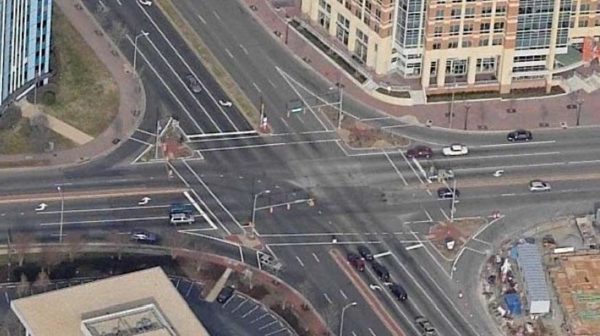
The intersections — Glebe and Carlin Springs Road, Glebe and Wilson Boulevard, and Glebe and Fairfax Drive — involve long crosswalks across numerous lanes of fast-moving traffic, as well as the occasional slip lane. The improvements are intended to make crossing the intersections safer by reducing crosswalk distances and “conflict points.”

At Glebe and Fairfax, crews will “regularize intersection geometry” — i.e. convert “suburban” slip lanes into “urban” 90-degree turns controlled by the stop light. Crews will also widen the mid-intersection pedestrian refuge.


Around Town

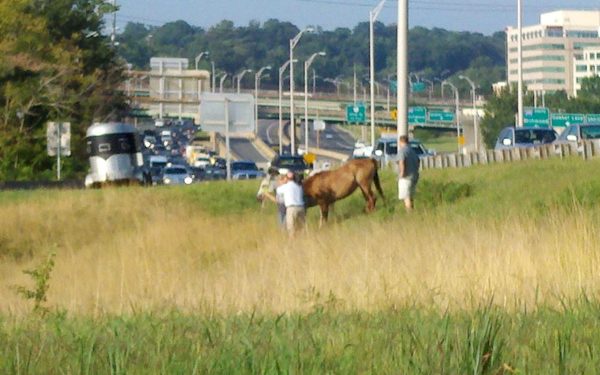
No, you weren’t imagining things on your commute that morning. Those were, in fact, two horses grazing near the off-ramp from northbound I-395 to Glebe Road.

It’s unclear why exactly the horses were there — some sort of accident or mechanical mishap involving the tow vehicle, perhaps — but those tending to the horses apparently decided that they needed to munch on some grass while waiting to continue on with their journey.


Traffic

Construction blocked the sole northbound lane of N. Randolph Street at the Glebe Road intersection around lunchtime today.

A dump truck and a backhoe made travel on both northbound Randolph Street and northbound Glebe Road a bit tricky for drivers, cyclists and pedestrians. A lone worker with a florescent vest tried to get southbound traffic on Randolph to stay out of the turn lane so northbound traffic could get around the construction. Meanwhile, a lane was also blocked on northbound Glebe Road.


News

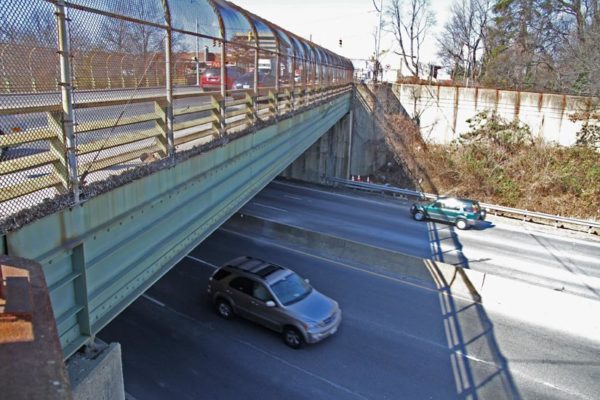
Drivers heading across the Glebe Road/Route 50 bridge are now encountering lane closures and heavier traffic during the day.

The bridge that carries Glebe Road traffic over Route 50 is being replaced over the next 15 months. Initially, we had been told that “any lane closures or shifts… will occur between 9:00 p.m. and 5:00 a.m.” and that there would be “no major construction impacts… during the day.”


News

The agency says construction on the new bridge will begin this summer and will wrap up in fall 2012 — a bit later than originally anticipated. The entire 100-foot-long bridge deck will be replaced with pre-cast concrete panels, and will be 27 feet wider than the existing bridge. The extra width will be used to install a 10-foot wide sidewalk, a 17-foot wide shared-use path and a new northbound turn lane. There will also be new traffic signals, “decorative wrought-iron picket fencing” and LED lighting.

On Thursday, June 2, at 7:00 p.m., VDOT will hold a ‘pardon our dust’ meeting for community members at Thomas Jefferson Middle School (125 S. Old Glebe Road).


News

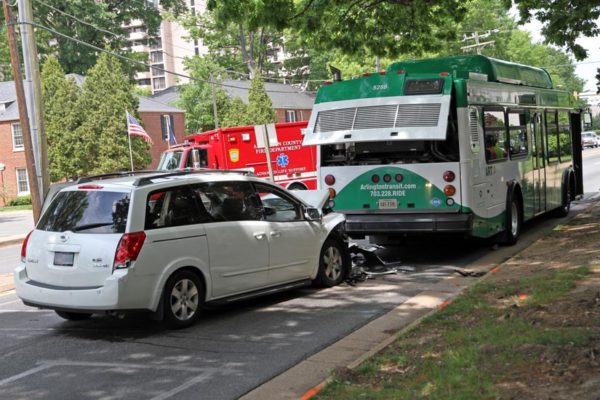
The first accident occurred around 11:30 a.m. at Glebe Road and 4th Street N. A minivan rear-ended a bus stopped at a bus stop, sending two people to the hospital.

The second accident happened three blocks away on Glebe Road and 7th Street N., according to Arlington Transit Services Manager Steve Yaffe.


News

Update at 3:00 p.m. — The driver of the van has been charged with reckless driving, according to Arlington County police spokeswoman Det. Crystal Nosal. A passenger from the bus and the van driver were both taken to the hospital after the accident, Nosal said.

A minivan slammed into the back of an Arlington Transit (ART) bus at the intersection of N. Glebe Road and 4th Street, near Ballston, just after 11:30 this morning.


Around Town

As The Weather Channel and anyone with seasonal allergies can tell you, the pollen level in the D.C. area right now is very high.

It’s something of an annual spring rite of passage — tree pollen levels rise as temperatures get warmer, allergy sufferers start suffering, and everything gets covered with a fine, lime green layer of a tree’s reproductive cells.


View More Stories